

Ausmed is a Trusted Information Partner of Healthdirect Australia. Verify here.


© 2026 Ausmed Pty Ltd (ABN: 33 107 354 441)
Supervision happens. Proving it happened is the hard part. Give team leaders a structure for practice supervision, and hold what it produces in the same capability record as a worker's training, their competency sign-offs and their credentials.
Book a walkthroughSupport work in disability is often done alone, in someone's home. Supervision is where practice gets examined between incidents, which makes it the main quality control you have.
Most providers can show that sessions were scheduled. Far fewer can show what was discussed, what was decided, or whether anything changed afterwards. Quality varies by team leader and your reporting will not tell you which ones need support, because a thorough session and a perfunctory one look the same in a completion rate.
It is the one quality control that happens in a room with two people in it and nothing to show for it afterwards. What gets written down stays where it was written, so it never reaches the record that says whether a worker is capable.

The only thing most systems record is that a session took place. What was discussed, what was decided and how well the leader handled it all sit outside the record.

A shift needs covering, so the supervision meeting moves. It moves again. Three months later nobody can say when the last real one was.

Notes live in a notebook or a personal document. Nothing aggregates, so a concern raised in three separate teams never becomes a visible trend.

Everyone gets the same monthly slot regardless of what they deliver. The standard expects supervision proportionate to the complexity of the supports, and a flat schedule is not that.

An action comes out of a supervision conversation and lands nowhere. There is no follow-up, so the next session starts from the beginning.

Supervision draws on the worker's account and the supervisor's impression. The people best placed to describe the support are not asked.
Each of these needs a different cadence, a different form and a different level of confidentiality. Ausmed Perform™ runs them all as programs.
See it with your own cyclesA consistent agenda every team leader follows, with prompts that hold the conversation on practice.
After a reportable incident, assign a reflective practice activity to the people involved and capture what came out of it.
A separate, confidential cycle for practitioners with their own professional supervision requirements.
Structured checkpoints through a new starter's first 90 days, so a poor fit is identified while something can still be done about it.
Short, frequent check-ins for workers who rarely see a colleague, completed from a phone.
The formal cycle, drawing on everything recorded through the year.
Define the cadence, the participants and the form once. Perform issues each round on schedule and sends reminders, and the Tasks workroom shows you every overdue task by manager, team and program. A cycle no longer depends on a coordinator remembering.
Ausmed Perform™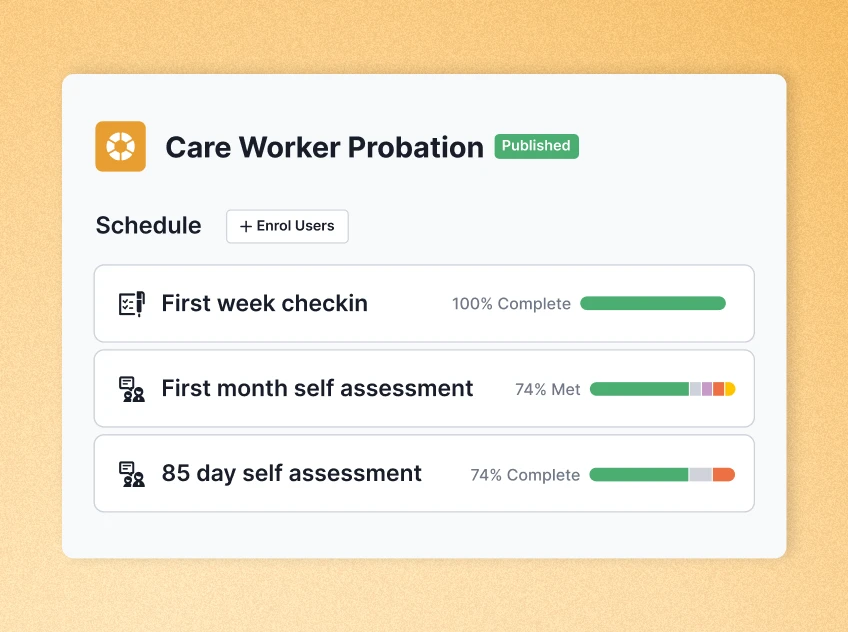
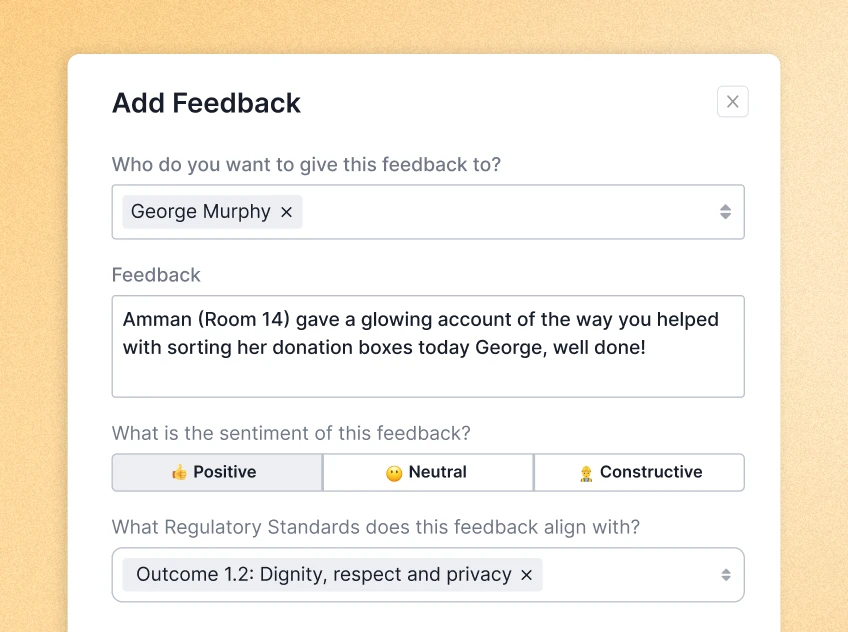
Feedback can be captured from a manager, a co-worker, a client, a resident or a family member, tagged to the standards it speaks to. In disability that matters more than anywhere else: the people best placed to judge a support worker's practice are the participant and the people around them.
Self-assessment before the session gives you a second data point, and where a worker's self-rating and their supervisor's diverge, that gap is usually the conversation that needs to happen.
Team leaders capture observations as they happen - a handover done well, a difficult escalation handled calmly, a concern worth watching. By review time the evidence is already there, and it covers twelve months rather than three weeks.
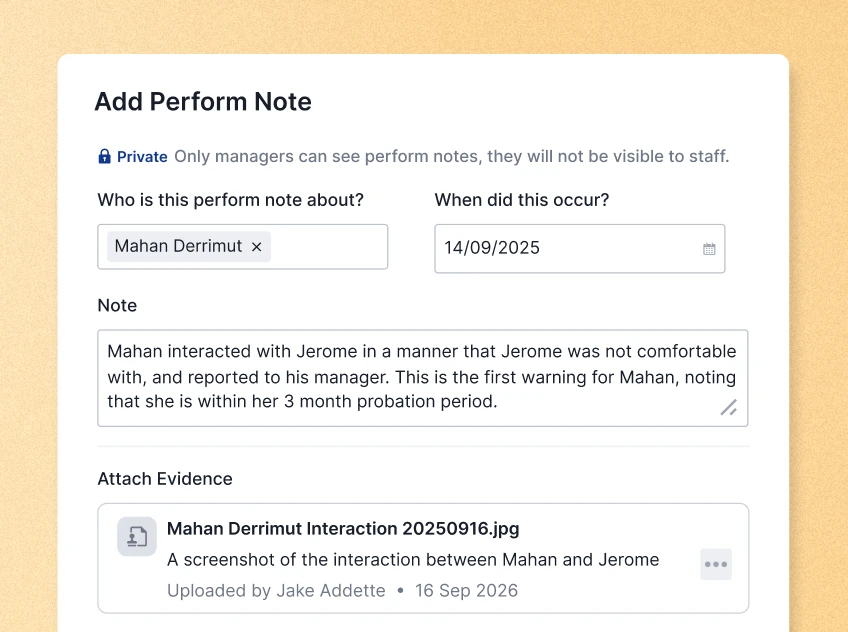
Programs, self-assessment, feedback and notes, running on your own cycles.
Ausmed Perform™A practice concern raised in supervision can open a reassessment, so it lands somewhere with a status on it.
Ausmed Competency™Supervision coverage by team and site, so you can see which leaders need support themselves.
Ausmed Analytics™ NDIS Practice Standards · Core Module
"Each participant's support needs are met by workers who are competent in relation to their role, hold relevant qualifications, and who have relevant expertise and experience to provide person-centred support."
The indicator beneath it asks for supervision scaled to the complexity of the supports delivered. Not a monthly ritual applied evenly: more of it for complex bowel care in a SIL house than for community access, and you have to be able to show the difference.
An auditor asks what was discussed, what was decided, what changed, and whether the frequency matched the risk. A calendar invite answers none of them.
Read the Core ModuleIf that worker later goes through a performance process, or is named in a complaint or a reportable incident, the supervision note is the evidence that somebody raised it and when. "I spoke to her about it months ago" is not evidence. The Core Module asks for worker performance to be "managed, developed and documented", and this is the document.
Audit preparednessA conversation about how supervision runs in your organisation today, and what it would take to make it consistent.
Perform Notes are a manager-only record and are never shown to the staff member. Meetings and self-assessments are visible to the worker, their manager and administrators with the relevant permission.
Yes, from the Ausmed app, which matters when the conversation happens in a car between houses rather than at a desk.
It can, or it can sit alongside it. Most providers run frequent light-touch practice supervision plus one formal annual cycle, both as programs, with the annual review drawing on the year's notes.
Ausmed is a Trusted Information Partner of Healthdirect Australia. Verify here.