


Ausmed is a Trusted Information Partner of Healthdirect Australia. Verify here.


© 2026 Ausmed Pty Ltd (ABN: 33 107 354 441)
For quality and safeguarding leaders at registered NDIS providers with 150 staff or more: a system that answers whether your workforce is capable, with the evidence behind the answer.
Book a walkthrough
Core module, HIDPA, and every registration group you hold, with evidence behind each one.

Evidence produced in days, out of one system.

Corrective actions that reach the right workers and can be shown to have landed.

Knowing who is authorised, trained and currently assessed before a shift is allocated.

A defensible number for workforce capability that holds up to a follow-up question.

The same expectations in a metro SIL house and a regional community access team.
Scope the Audit Report to the teams and locations under audit, choose the requirements in scope, and export what was required, who it applied to and where it was unmet - with room to comment against each person who has an outstanding requirement.
Audit preparedness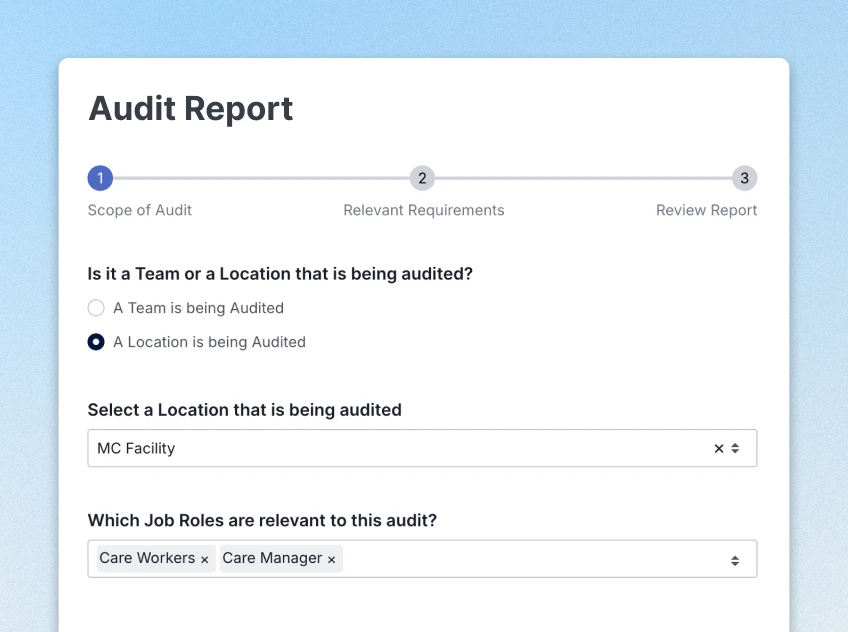
Generate a Team Report every month for every team and location, and Board Reports monthly or quarterly on a calendar. Learning compliance trends, requirement states, extensions and learning hours, all branded and downloadable. Nobody has to remember to run them, taking the key-person risk out of your governance reporting.
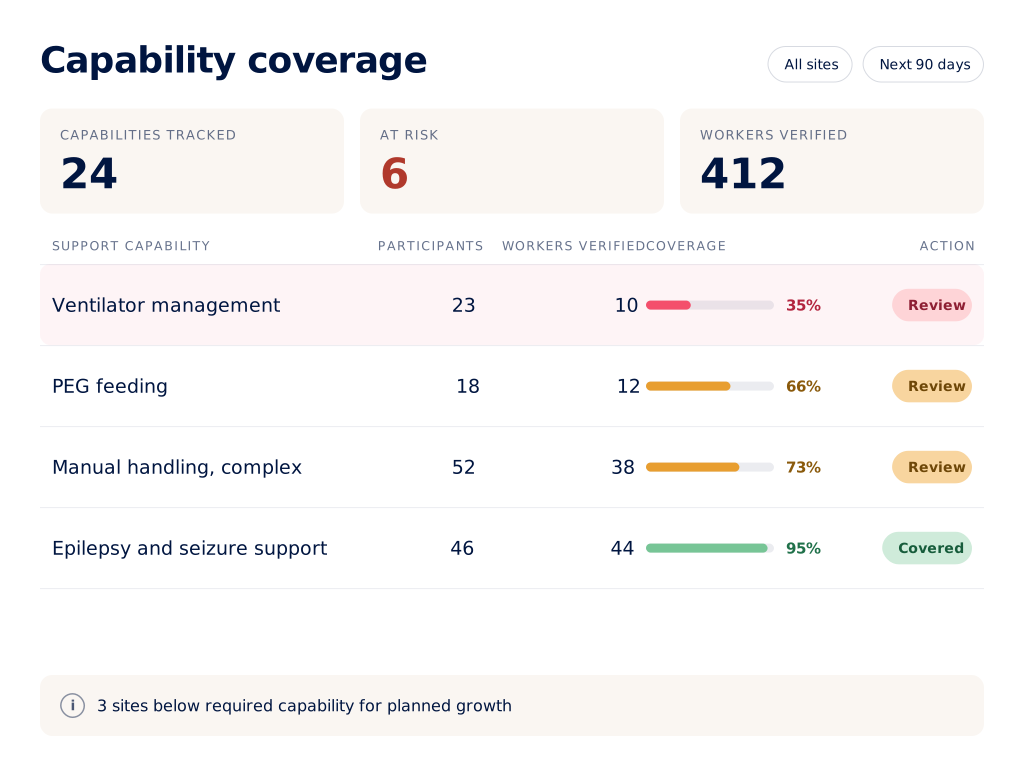
It also shows you the two houses where sign-offs are slipping out of date while that is still a training conversation rather than a reportable incident.
Evidence assembled continuously, so it is ready when someone asks.
Audit preparednessTraining and Governance lead, NDIS provider, 1,200 staff
A practical conversation about your registration groups, your workforce structure and where your evidence is thin.
Most providers don't have an LMS problem, they have a requirements problem. Nothing connects the participant, the worker, the evidence and the roster. That's the layer Ausmed adds, and it's why providers who are otherwise happy with their LMS still move.
Library content is written and maintained in Australia under Ausmed's T.R.U.S.T.E.D. governance framework and updated centrally when requirements change, so you aren't reissuing content yourself.
No. Ausmed handles the workforce capability side of a corrective action by assigning targeted training or reassessment to the right people and evidencing that it happened. Your incident system remains the system of record.
Ausmed is a Trusted Information Partner of Healthdirect Australia. Verify here.