

Ausmed is a Trusted Information Partner of Healthdirect Australia. Verify here.


© 2026 Ausmed Pty Ltd (ABN: 33 107 354 441)
Workforce evidence assembled continuously against the NDIS Practice Standards, so a mid-term audit is a reporting exercise rather than an entire project that takes your quality team off everything else.
Book a walkthroughThe training happened. The assessment happened. The supervision happened. What eats the calendar is proving it: pulling completion data out of one system, certificates out of another, signed checklists out of forty site folders, and reconciling all of it against a standard nobody mapped it to in the first place.
While reconstruction under time pressure is where gaps get discovered, the week before an audit is the worst possible moment to learn that a whole team's manual handling assessments lapsed in March.
It is also expensive, and the cost is the kind nobody budgets for because it never appears as a line item. It appears as four coordinators spending a few hours a week reconciling records, and a quality team disappearing for a fortnight twice a year.
What capability admin costs you in a year: the time spent reconciling records and checking eligibility before a shift, plus the evidence gathering around each audit.
$365 per worker, a year
Assumes 48 working weeks and a 7.6 hour day. Capability admin covers reconciling records and checking eligibility before a shift. Estimates only.
Evidence gathering is not a project with a start date and an owner. It is hours taken out of other work, spread across coordinators and a quality team, which is why nobody has ever had to approve it.

Completions in the LMS, certificates in HR, checklists on paper, acknowledgements in email. Nothing joins them, so a person does, by hand.

Records were kept for operational reasons. Mapping them to a standard happens from scratch each cycle, by whoever did it last time.

The strongest evidence you hold is often a signed form in a building three hours away, and it cannot be produced from head office at all.

A worker who left last year is still in scope. Their evidence was current when they were here and nobody has been able to find it since.

Four coordinators spending a few hours a week does not appear in any budget. It appears as work not done elsewhere, which is why it is never challenged.

An action is marked complete because the training was arranged. Whether the affected workers completed it is a separate question nobody asks.
Quality and Safeguards Manager, NDIS provider, 1,200 staff
An audit is only one moment in time. The same reporting is asked for by the board, the funder, the insurer and the incident review committee.
See it against your standardsBuild the Audit Report scoped to the teams and locations under audit, with the requirements in scope selected from your training plans.
Before you apply, see which workers would meet the new group's requirements and which would not.
Show what the affected workers had completed at the time of the incident, and what was assigned afterwards.
A capability position for the board that survives the follow-up question about how you know.
Workforce capability claims backed by a number you can produce on request.
Map an acquired workforce onto your framework and see the real gap within days.
Every requirement, module and assessment carries its alignment to the NDIS Practice Standards. The mapping is done once, centrally, and maintained as the standards change, so your evidence is already organised the way an auditor reads it.
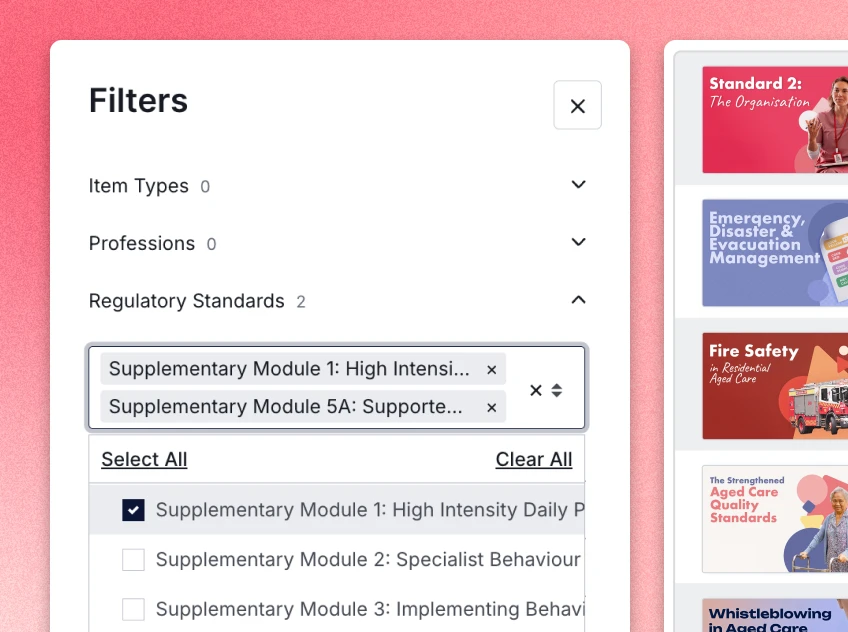
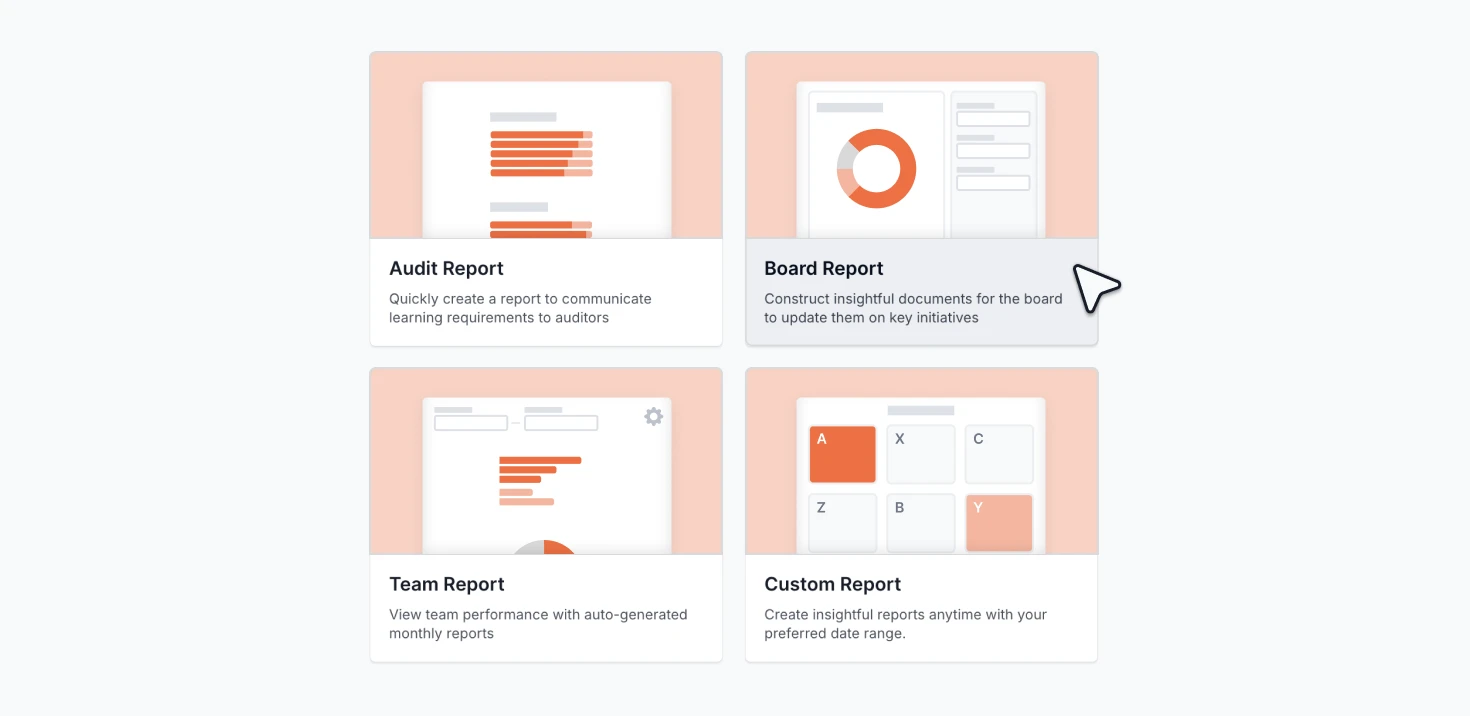
A purpose-built Audit Report in Ausmed Analytics™. Scope it to the teams and locations under audit, pick the requirements in scope from your training plans, and it assembles the rest.
Ausmed Analytics™Shared Reports generate a link that someone without a login can open, so the auditor reads the live report rather than a PDF you exported last Tuesday. Behind it, the Audit Log holds a searchable record of every administrative change with before and after values.
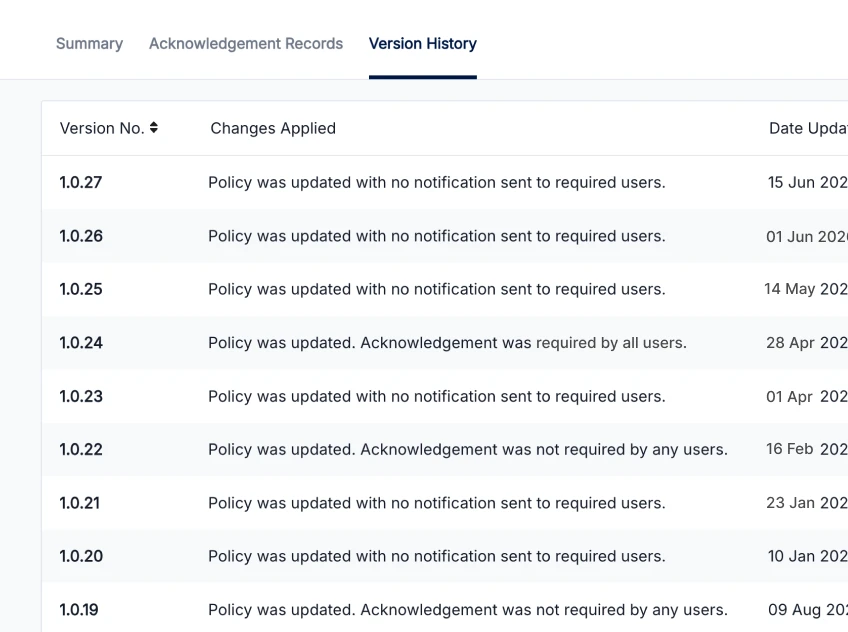
The Audit, Board and Team Reports over your learning and policy compliance data.
Ausmed Analytics™What each participant's supports require, which is what turns eligibility into evidence.
Participant PlansContent written and maintained in Australia under the T.R.U.S.T.E.D. governance framework.
See the LibraryNDIS Practice Standards · Core Module"Each participant benefits from a quality management system relevant and proportionate to the size and scale of the provider, which promotes continuous improvement of support delivery."
Evidence assembled in the weeks before an audit is not a system. An experienced auditor can tell the difference between one that runs and a folder that was filled last month.
"Risks to participants, workers and the provider are identified and managed."
A worker whose screening lapsed on Friday and who is rostered on Saturday was identified by nobody, because the only place it was visible was a spreadsheet reconciled monthly.
Read the Core ModuleCoverage across the Core Module, the High Intensity Daily Personal Activities module and the supplementary modules relevant to your registration groups, so one system answers the whole scope rather than most of it.
Tell us when your next audit is and which groups are in scope, and we'll show you what the evidence export would look like.
No, and be wary of anyone who says otherwise. Ausmed makes your workforce evidence complete, current and retrievable. Whether your practice meets the standard is a matter for your organisation and your auditor.
Yes. Upload external certificates and records against a worker so the export is complete, rather than maintaining a second source for the things Ausmed didn't deliver.
Ausmed holds ISO 27001 certification for information security, which providers are increasingly asked to evidence for their own supply chain.
Ausmed is a Trusted Information Partner of Healthdirect Australia. Verify here.