


Ausmed is a Trusted Information Partner of Healthdirect Australia. Verify here.


© 2026 Ausmed Pty Ltd (ABN: 33 107 354 441)
For people leaders at registered NDIS providers with 150 staff or more: connect a employment record to a capability record, so onboarding, mobility and exit all carry compliance records with them.
Book a walkthrough
Getting new starters productive fast, in a sector with turnover you don't control.

Nobody working in a risk-assessed role on a lapsed clearance. Ever.

Positions, appointments and terminations flow out once, with no re-keying.

A review process that completes, and that managers have evidence for.

Absorbing a workforce without inheriting an unknown compliance position.

When a matter goes to a tribunal, being able to show what was required and what was provided.
Where HRIS sync is enabled, user profiles flow from your HRIS into Ausmed and the portal becomes read-only for that data - so nothing is maintained twice and nobody in HR becomes the person who remembers to tell the LMS that someone left.
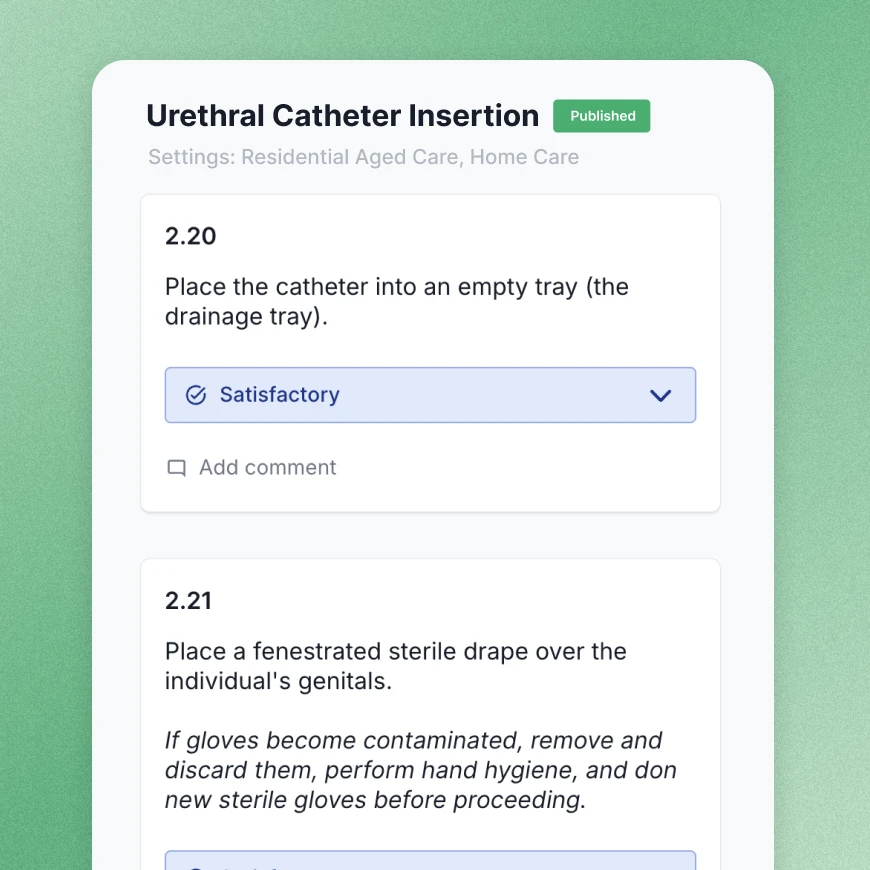
When a matter reaches a tribunal the question is documentary: what the role required, what the worker was assigned, when they completed it, and what their manager recorded at the time. Training, competency sign-offs, credentials and supervision notes sit against the worker, dated and attributed, so the answer is retrieved rather than reconstructed.

Participant Plans, so a worker moving house does not create a silent gap.
Participant PlansLearning and development lead, NDIS provider
Tell us about your HRIS and where your onboarding sequence currently breaks, and we'll be straight with you about whether Ausmed fits.
Their requirements close with the termination, and their historical evidence is retained against the dates it applied to. That is what you need if a period they worked in is later audited.
Ausmed holds ISO 27001 certification for information security. Access to sensitive records such as credential evidence documents is restricted to nominated verifiers and administrators.
Ausmed is a Trusted Information Partner of Healthdirect Australia. Verify here.