


Ausmed is a Trusted Information Partner of Healthdirect Australia. Verify here.


© 2026 Ausmed Pty Ltd (ABN: 33 107 354 441)
For hospitals and day procedure services assessed at short notice. Work through the training, performance, scope of practice and credentialing actions in the Clinical Governance Standard one at a time, with the report or record in Ausmed that answers each one.
Book a walkthroughEvery public and private hospital and day procedure service assessed to the NSQHS Standards now goes through short-notice assessment.
Interim accreditation comes with notice, and so does a final assessment after a remediation period. The routine assessment in each cycle doesn't. It can fall at any point in the three-year cycle.
“From 1 July 2023, all public and private hospitals and day procedure services undergoing assessment to the NSQHS Standards” are assessed at short notice. “Organisations will generally have 24 hours-notice of their assessment commencing.”
For most services, 24 hours' notice means one full business day. Rural and remote services with limited or no public transport get two.
In Ausmed, the record stays current between assessments. User sync enrols starters and removes leavers. Recurring assignment brings annual training back on schedule, and reminders escalate to managers when training goes overdue.
When the call comes, the reports run from what is already there.
These actions sit in Standard 1, the Clinical Governance Standard, under the criterion Clinical performance and effectiveness. The Standard groups them as safety and quality training (Actions 1.19 to 1.21), performance management (Action 1.22), and credentialing and scope of clinical practice (Actions 1.23 and 1.24).
The workforce has the right qualifications, skills and supervision to provide safe, high-quality health care to patients.
The same criterion also covers safety and quality roles, supervision, evidence-based care and variation in clinical practice (Actions 1.25 to 1.28).
The sections below take Actions 1.19 to 1.24 one at a time, with the record Ausmed produces for each. Credentials holds the record for Action 1.24.
The action covers the governing body, clinicians, and every other employed, contracted, locum, agency, student or volunteer member of the organisation. Agency staff and locums are the usual gap, because they arrive outside the normal induction cycle.
The health service organisation provides orientation to the organisation that describes roles and responsibilities for safety and quality for:
a. Members of the governing body
b. Clinicians, and any other employed, contracted, locum, agency, student or volunteer members of the organisation
Assign orientation to each role, starting from the Induction: Acute Care template.
Powered by
Each starter comes across from your HR system and is enrolled on their first day.
Powered by
Give casual and agency staff a shorter onboarding plan of their own.
Powered by
Ausmed assigns them automatically to staff who join through an integration, an invitation or single sign-on.
Powered by
Run enrolment for an in-person orientation day and record attendance against each person.
Powered by
Show the assessor who has completed orientation, filtered by role.
Powered by
Most hospitals build their mandatory training programs around this action. An assessor can ask for evidence against any one of its four parts.
The health service organisation uses its training systems to:
a. Assess the competency and training needs of its workforce
b. Implement a mandatory training program to meet its requirements arising from these standards
c. Provide access to training to meet its safety and quality training needs
d. Monitor the workforce’s participation in training
Observed sign-offs built from your own assessment tools, with Competent and Not Yet Competent results. Knowledge Verification pre-tests show who already knows an eligible topic.
Powered by
Training plans by job role and location, recurring assignment for annual requirements, and an Annual Mandatory Training: Acute Care template to start from.
Powered by
Your own courses, built in Course Builder, beside more than 1,000 Hospital and Acute Care resources, on desktop and the Ausmed mobile app.
Powered by
Compliance reports by NSQHS Standard, team, role or location, and the overdue list in the Workroom.
Powered by
The action asks for strategies, and workforce training is usually one of them. Many hospitals already run a cultural safety program of their own, and Ausmed doesn't need to replace it.
The health service organisation has strategies to improve the cultural safety and cultural competency of the workforce to meet the needs of its Aboriginal and Torres Strait Islander patients
Assign your cultural safety program by role, through the same training plans as mandatory training.
Powered by
Staff complete the online parts of your program on desktop or the Ausmed mobile app.
Powered by
Run in-person sessions with enrolment and waitlists, and record attendance against each person.
Powered by
Report participation alongside the rest of your training, as the evidence an assessor asks for.
Powered by
Annual appraisals are common. The second and third parts of this action, identifying training needs and getting them into the training system, are where paper processes fall short.
The health service organisation has valid and reliable performance review processes that:
a. Require members of the workforce to regularly take part in a review of their performance
b. Identify needs for training and development in safety and quality
c. Incorporate information on training requirements into the organisation’s training system
Run probation programs, annual appraisals and catch-ups, each recorded against the staff member.
Powered by
Attach notes and supporting evidence to each review.
Powered by
Assign and report the training a review identifies, on the same staff record.
Powered by
Reviews and training sit together, so an assessor sees both in one place.
Powered by
Action 1.23 asks you to define and monitor scope of clinical practice, and to review it periodically and whenever a new clinical service, procedure or technology is introduced or substantially altered.
Action 1.24 covers credentialing, which usually sits with a credentialing committee and its own records. Credentials holds each clinician's registrations and clearances alongside their training and competency.
The health service organisation has processes to:
a. Define the scope of clinical practice for clinicians, considering the clinical service capacity of the organisation and clinical services plan
b. Monitor clinicians’ practices to ensure that they are operating within their designated scope of clinical practice
c. Review the scope of clinical practice of clinicians periodically and whenever a new clinical service, procedure or technology is introduced or substantially altered
See which approved assessor signed a clinician off as competent in which procedure, and when.
Powered by
Build the assessment when a new procedure or piece of equipment comes in, and assign it with the training to the role that will use it.
Powered by
See who is signed off before they start.
Powered by
Bring the assessment back when recertification is due.
Powered by
Hold each clinician's registrations and clearances, verified once, with reminders before each one expires.
Coming soonAn assessor can ask about any of Actions 1.19 to 1.24, for any member of the workforce, including agency staff and locums. Ausmed holds the record for them all.
| Action | Evidence an assessor can ask for | Where it sits in Ausmed |
|---|---|---|
| 1.19 Orientation | Orientation records for the governing body and every member of the workforce in scope, including agency, locum, student and volunteer staff | Induction training plans by role, enrolled from your HR data; onboarding plans for casual and agency staff; policy acknowledgements; Events attendance |
| 1.20 Training systems | Competency and training needs assessed, a mandatory program, participation monitored | Training plans with recurring assignment, Knowledge Verification, Ausmed Competency™ sign-offs, reports by NSQHS Standard |
| 1.21 Cultural safety | Participation in your cultural safety and cultural competency program | Your program assigned by role, online or through Events, and reported like any other training |
| 1.22 Performance review | Reviews completed, and training needs identified and acted on | Probation programs, appraisals and catch-ups in Ausmed Perform™, on the same staff record as training |
| 1.23 Scope of practice | Scope defined, monitored, and reviewed periodically and when a service, procedure or technology is introduced or changed | Competency records by procedure, assessor and date, to support scope decisions |
| 1.24 Credentialing | A credentialing process, monitored and improved | Registrations and clearances in Credentials, verified and tracked to expiry. The credentialing decision stays with your committee. |
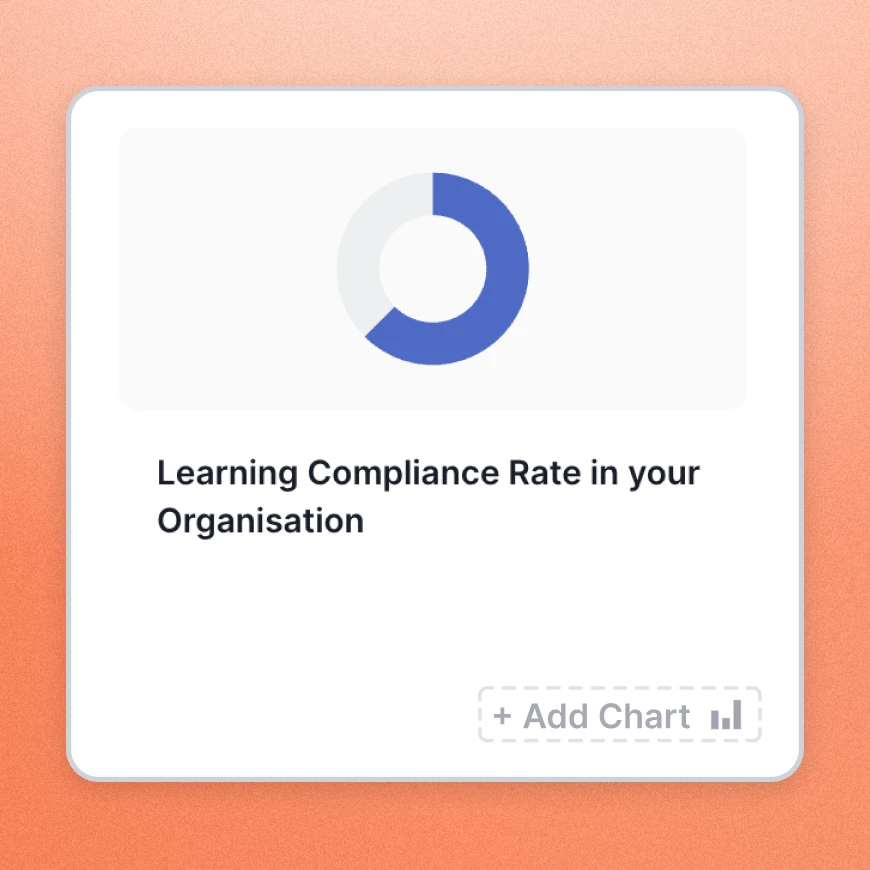
Compliance reports run by NSQHS Standard and filter by site, team, role or location. The Audit Report in Ausmed Analytics™ shows the status of each requirement for each person, with timestamps and version history. Export it as CSV or PDF.
For a group, site comparisons put the hospitals side by side, so every site that goes through assessment starts from the same export.
Compliance Reporting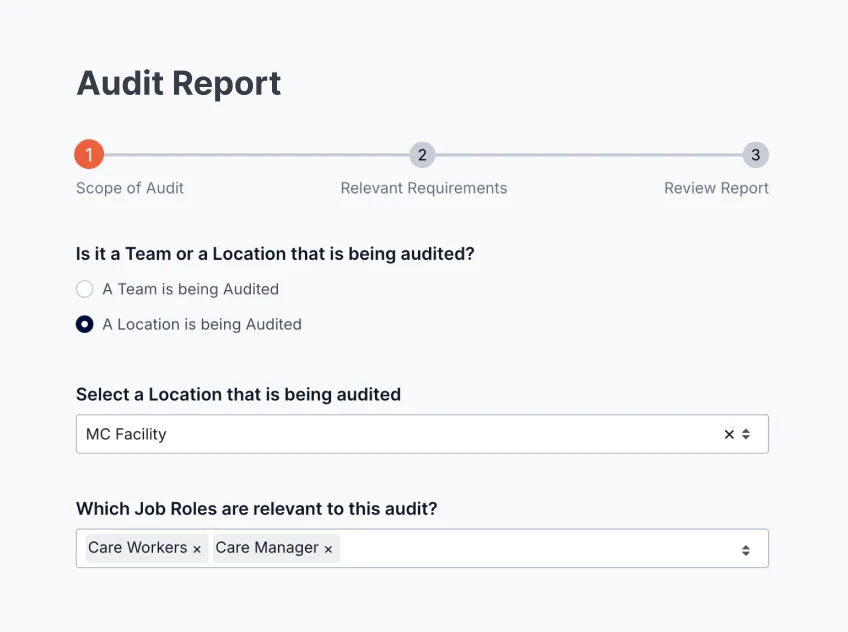
Assessors look at the workforce today. Coroners, workers compensation claims and legal requests ask what a clinician had completed, and been assessed on, at a date that may be years back.
Every completion and sign-off in Ausmed carries its date, and records stay with the person when they change roles or leave.
Private day hospital and specialist clinic, Western Australia

Get the whole workforce record ready for a short-notice assessment.
NSQHS Re-accreditationBring the last workforce report you put together for accreditation, and we'll build the same report in Ausmed while you watch.
The second edition, which accrediting agencies assess hospitals and day procedure services against today.
The Commission's consultation on a draft third edition closed on 25 September 2026. Health services will pilot the next draft in 2027, ahead of final release in 2028 and assessment commencing in 2030.
Yes. Day procedure services must hold accreditation to the NSQHS Standards, the same eight Standards as any hospital. They have been in scope for short-notice assessment since 1 July 2023.
The Commission's advisory on not applicable actions lets some day procedure services set aside a few actions, such as those for services that don't admit patients overnight. None of the workforce actions 1.19 to 1.28 is among them.
Records stay against the person after they leave, and you can still report on their training and sign-offs when a request comes in.
Not necessarily. Credentialing decisions stay with your credentialing committee. Ausmed holds the training and competency records that scope of practice decisions draw on, and credential records can be stored in Ausmed if you choose.
Ausmed is a Trusted Information Partner of Healthdirect Australia. Verify here.