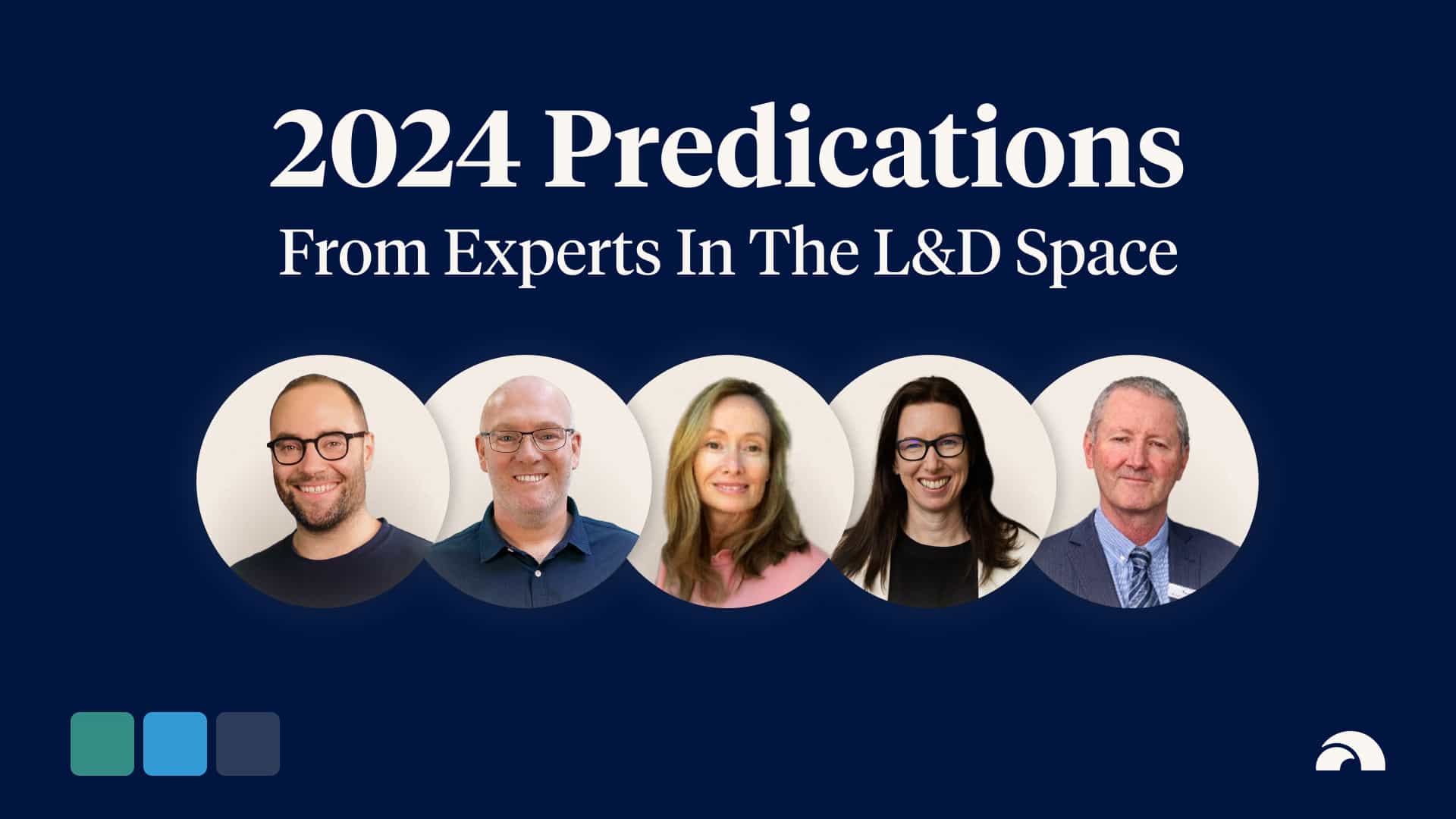
We recently asked five experts what their predictions were. We were keen to uncover key trends, challenges, and skills that might define the year. As we all get set up for another year of empowering and educating Australia's health and aged care workforce, let's take a moment to dive into the crystal ball and explore what the future holds for learning and development (L&D).
Who did we speak to?
- Michelle Wicky, Chief Customer Officer at Ausmed Education
- William Egan, CEO of Ausmed Education
- Tony McGillion, Divisional Director of Education & Training at Northern Health
- Fiona Wallace, Organisational Development Manager at Twilight Aged Care
- Tony King, Clinical Nurse Educator, Intensive Care at Epworth Hospital
What are the key changes that will impact L&D?
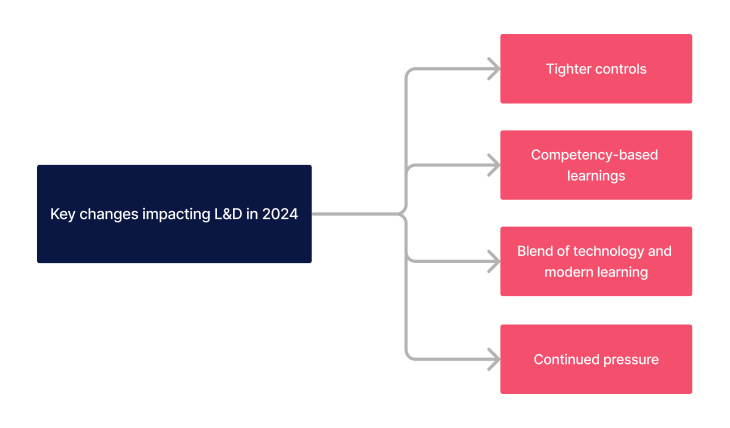
- Tighter controls on learning and a need to show a ‘proof of knowledge’.
- A shift from compliance-based towards competence-based learnings (especially in aged care) reflects the industry's commitment to enhancing quality standards and improving care outcomes.
- The blending of technology and modern learning approaches with traditional methods to cater to the preferences of a TikTok-loving workforce.
- Continued pressure on healthcare education and L&D budgets due to ongoing COVID-19 and economic uncertainties (high interest rates, tax uncertainties and inflation).
Key Skills for 2024
Unquestionably, our experts believe that the key skill for L&D teams to both teach and practice is how to harness AI for positive outcomes.
Why? Tony McGillion explained that many people still view it negatively, especially in academic environments. The addition of technology in clinical settings has also arguably led to the de-emphasis of patient-centred communication, as the centre of attention is at risk of moving from the bed to the computer. Upskilling clinicians to use AI safely is essential so as not to miss vital cues from patients due to their attention being diverted.
Tony King adds that it is our responsibility to teach the skill of being able to critically appraise information. Or put simply, the skill of being able to question where information is coming from, and whether this person has credibility to quote what they are telling someone else is true.
This article provides some basic pointers on the critical evaluation of evidence.
Fiona Wallace believes there needs to be a sustained focus on delivering education on food, nutrition and the dining experience due to the new Aged Care Quality Standard 6: Food and Nutrition. Tony King wants us to get creative! He says that we don't need to abandon traditional lecture formats but we do need to embrace brief tutorials/videos to capture an evolving workforce.
Listen to Episode 1 of Ausmed’s Outcomes Podcast where Rebecca Pacey from Infinite Care shares how they use TikTok to engage with staff and residents.
Key Quotes
Tony McGillion noted that in recent years there has been a big emphasis on supporting our clinicians “but I think we also need to support our leaders so they can continue to support others”
Will Egan commented that the key role of an L&D team remains the design and delivery of an effective education program “that puts improving consumer outcomes at the centre of its KPIs”.
Over to you!
Feeling inspired by the insights shared in this article? Why not take a moment to reflect on your own predictions for L&D in healthcare education this year? Consider how you would respond to the following questions:
- What changes do you predict in learning and development in 2024?
- Anticipating trends or challenges, what do you see is the key role of L&D teams this year?
- From your perspective, what skills will be a priority for the workforce in 2024?