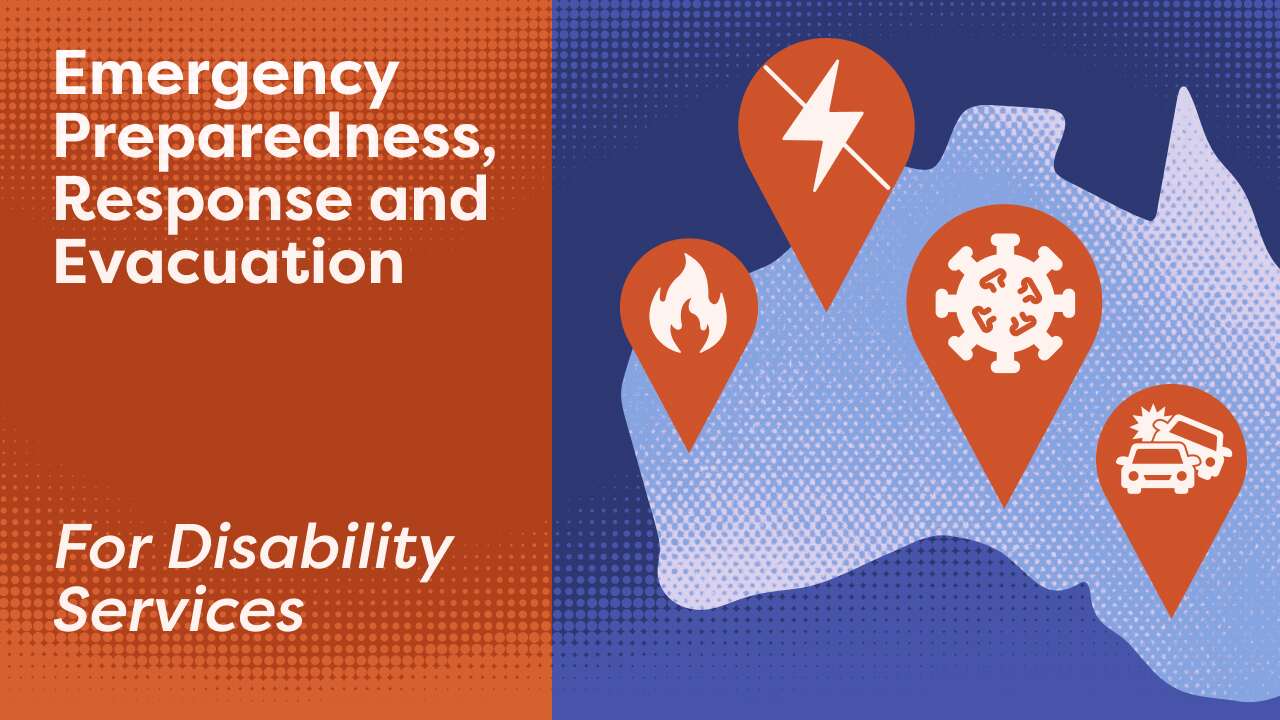
Emergency Preparedness, Response and Evacuation for Disability Services
CPDTime.
41m
Updated 13 Aug 2026 Certificate22 Ratings

Emergency preparedness, response and evacuation refers to the processes and skills that keep participants and workers safe before, during and after an emergency or disaster. Emergencies, including natural disasters, utility failures and public health emergencies, can affect any NDIS service setting at any time. Research shows that people living with disability face greater risk during these events than the wider community, largely due to inadequate emergency planning.

This Training Module covers emergency preparedness, response and evacuation requirements for registered providers and all workers under the NDIS Practice Standards and Code of Conduct. It will also explain key components of an emergency and disaster management plan, safe and person-centred evacuation procedures, and escalation strategies for supporting participants through an emergency.

Content

7 Units • 12 Questions
Pre-reflection
1 Question
Unit 1: Introduction
1 Question
2m
Unit 2: Understanding Emergencies
2 Questions
7m
Unit 3: Roles and Responsibilities
2 Questions
4m
Unit 4: The Emergency and Disaster Management Practice Standard
1 Question
5m
Unit 5: Recognising When to Evacuate
2 Questions
9m
Unit 6: Communication and Escalation
2 Questions
7m
Unit 7: Conclusion
1m
Post-reflection
1 Question

What you'll learn:

1

Identify key components of an emergency and disaster management plan for NDIS service settings.

2

Describe the roles and responsibilities of NDIS providers and workers in preparing for and responding to emergencies and disasters across NDIS service settings, in line with the NDIS Practice Standards.

3

Recognise safe evacuation procedures to support people living with disability during an emergency across NDIS service settings.

4

Identify effective communication and escalation strategies for responding to emergencies involving people living with disability.

Who it's for:

This content is intended for any worker supporting a person living with disability.

Topics

For Teams
Assign to your staff

Assign mandatory training and keep all your records in-one-place.

Find out more


Peer reviewed by
Content Integrity
Ausmed strives for the highest level of content integrity and accuracy in our educational resources.
Last updated13 Aug 2026

Published13 Aug 2026

Due for review31 Jul 2028
Disclaimer
Disclosure
Usage
Cite this resource

Recommended resources

Image for Hypoglycaemia Management in Aged Care
Hypoglycaemia Management in Aged Care
CPDTime.resource
24m
Lecture
Image for Insomnia in Older Adults: Assessment and Management
Insomnia in Older Adults: Assessment and Management
CPDTime.resource
24m
Lecture
Image for Insomnia in Older Adults: Introduction and Causes
Insomnia in Older Adults: Introduction and Causes
CPDTime.resource
16m
Lecture
Image for Insulin Therapy in Aged Care
Insulin Therapy in Aged Care
CPDTime.resource
34m
Lecture
Image for Pathology Interpretation
Pathology Interpretation
CPDTime.resource
28m
Lecture
Image for Prediabetes
Prediabetes
CPDTime.resource
31m
Lecture
Image for Prehospital-Diabetic Emergencies
Prehospital-Diabetic Emergencies
CPDTime.resource
34m
Lecture
Image for Recognising and Managing Cardiogenic Shock
Recognising and Managing Cardiogenic Shock
CPDTime.resource
21m
Lecture
Image for Sliding Scale Insulin: Best Practice Update
Sliding Scale Insulin: Best Practice Update
CPDTime.resource
15m
Lecture
Image for Unsettled Babies, Colic and Reflux
Unsettled Babies, Colic and Reflux
CPDTime.resource
28m
Lecture