Complex Wound Support For NDIS Support Workers
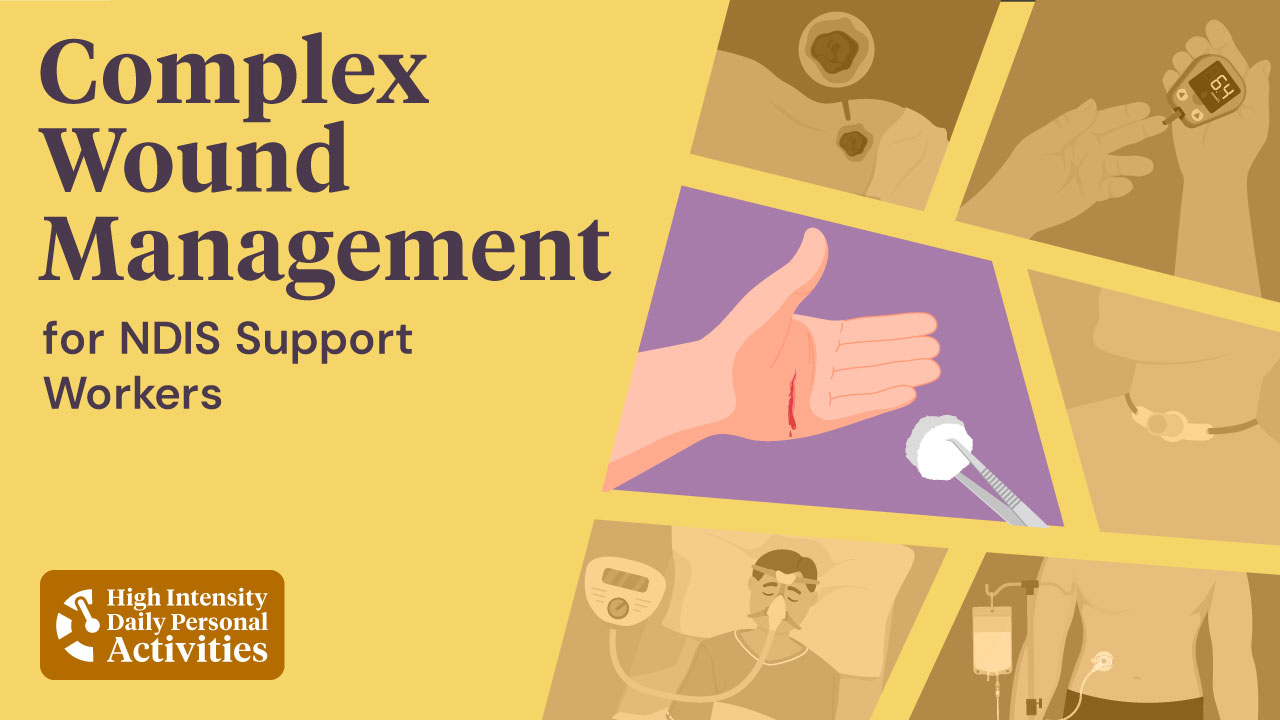
High intensity daily personal activities are specialised supports under the NDIS Practice Standards that involve high-risk tasks requiring advanced skills, knowledge and training. This Ausmed Training Module discusses the core skills and knowledge needed to provide complex wound support, including different types of wounds and dressings, how to prevent pressure injuries, and fundamental infection control considerations when supporting someone with a wound. Learn how to provide high-quality, safe care to people living with disability who require this type of support.
Note: This module is not a substitute for formal training or a competency assessment, which should be delivered by an appropriately qualified health practitioner.
To provide this high intensity support, you must be employed by an NDIS provider that is accredited to deliver this specific High Intensity Daily Personal Activity under the NDIS Practice Standards.
Content
What you'll learn:
Recognise and understand different types of wounds.
Identify risk factors, warning signs and prevention strategies for pressure injuries.
Understand the stages of wound healing and how this can be supported through wound dressings and other strategies.
Know what to observe, record and when to escalate concerns.
Who it's for:
NDIS support workers who:
- Are employed by an NDIS provider that is accredited to deliver this specific High Intensity Daily Personal Activity under the NDIS Practice Standards, and
- Have received appropriate training and have been assessed as competent by their organisation to provide this type of support.
Topics
Assign mandatory training and keep all your records in-one-place.
Find out more


Recommended resources